KDE Gets €1.3M and Europe Is Finally Getting Serious About Its Own OS
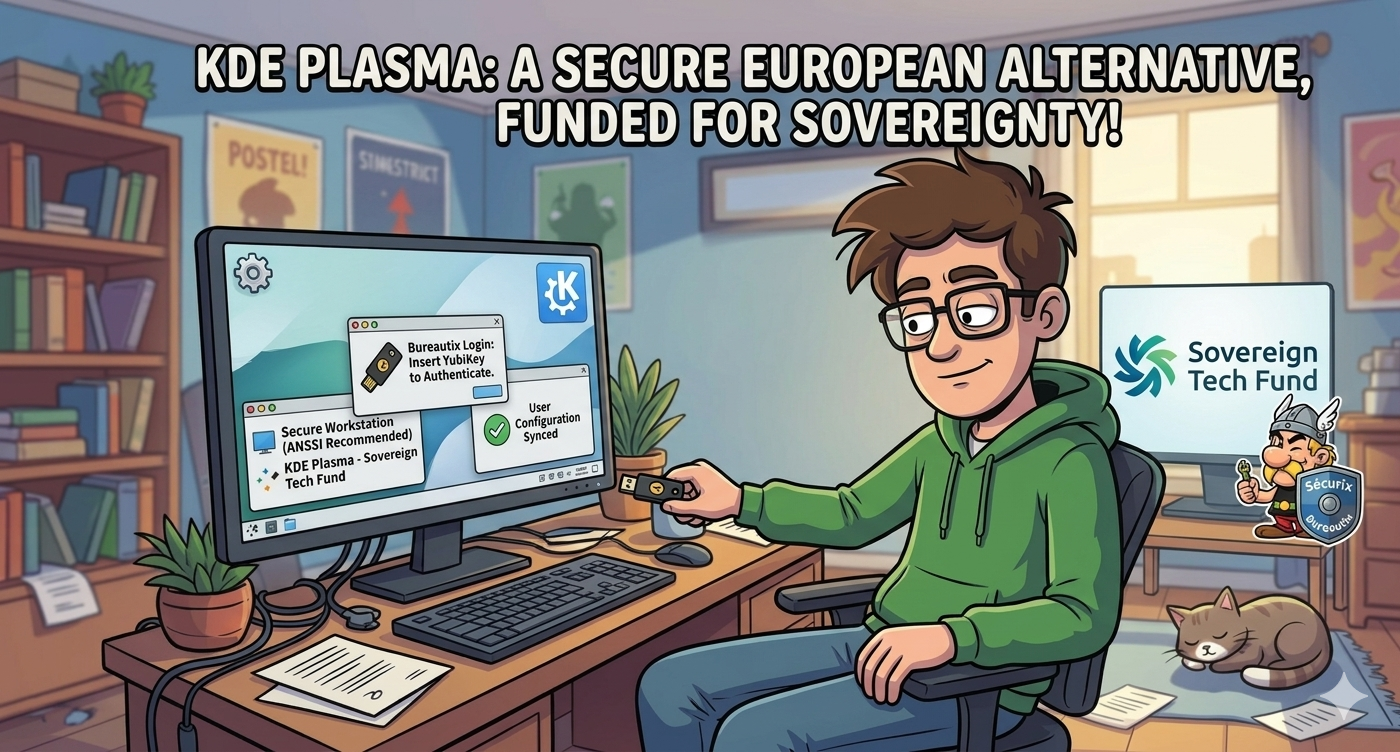
Right, so KDE turns 30 in five months, and someone has already bought the cake. Germany’s Sovereign Tech Fund has handed over €1,285,200 to the KDE project. That’s about £1.1 million, or $1.5 million if you’re counting in dollars. Not a bad early birthday present, is it?
The KDE team has been pretty upfront about where the money is going. According to their thank-you post, the investment is aimed at strengthening the structural reliability and security of KDE’s core infrastructure, including Plasma, KDE Linux, and the frameworks underlying its communication services. Solid, unglamorous, necessary work. The kind of stuff that doesn’t get applause but absolutely matters.
This isn’t the first time the Sovereign Tech Fund has thrown serious money at open source projects. Back in 2023 it gave €1 million to GNOME, then in 2024 it funded both FreeBSD and Samba. Good company to be in. But the context has shifted noticeably since then. Trump’s second presidency kicked off, and suddenly European digital sovereignty stopped being a polite conversation in conference rooms and started feeling genuinely urgent. I went over some of that mood shift when The Register reported from the Open Source Policy Summit in Brussels earlier this year.
Now, a decent chunk of that STF money is presumably going towards KDE Linux, which is fascinating in itself. If you haven’t been following it, KDE Linux is the project’s own in-house distro, still in development, and it’s technically quite interesting. It started life in 2024 as “Project Banana” (yes, really), hit alpha in 2025, and borrows a fair bit of its design from Valve’s SteamOS 3. Both are immutable distros built on Arch Linux, with dual Btrfs-formatted root partitions that update each other for failover, which is a similar approach to ChromeOS. It’s a smart pattern once you see how it works in practice.
There’s been real engineering effort behind some of this. Before SteamOS came along, Btrfs had some quirks around unique partition IDs that needed sorting. Valve partnered with Igalia, a Spanish workers’ cooperative (which is also doing interesting work on the Rust-based Servo web rendering engine), to get that done. Igalia has also received STF funding of its own, so there’s a nice little thread running through all of this if you pull on it.
SteamOS has millions of users. ChromeOS has hundreds of millions. These aren’t hobby distros running on one bloke’s home lab (hello), they’re resilient, frequently updated systems that ordinary people rely on without thinking about it. That’s as battle-tested as consumer-facing Linux gets. The fact that the STF is now backing KDE Linux with real money feels like at least a partial endorsement of the ideas behind it.
And the broader picture is shifting fast. Interest in moving European organisations off American cloud services and platforms has gone from a fringe concern to something that senior people are actually acting on. The Financial Times ran a piece this week on life without US tech, focusing on International Criminal Court judge Nicolas Guillou, who was sanctioned by the US and found himself locked out of basically everything that ran on American infrastructure. That’s a stark illustration of the dependency problem. The ICC is now moving to OpenDesk from German organisation ZenDIS, which I first came across in a FOSDEM report on messaging systems. Apps and suites rather than OSes, but it’s movement.
On the OS side specifically, France’s DINUM (the Directorate for Digital Affairs) is planning to adopt Linux, which The Reg mentioned last month. What’s interesting is how they’re going about it. Rather than building a whole new distro from scratch, or going with something like the Fedora-based EU OS proposal that was floating around last year, DINUM is building a Nix configuration that generates a complete bespoke immutable OS image. The base is called Sécurix, described as an OS base for secure workstations designed in line with ANSSI recommendations for secure administration of information systems. On top of that sits Bureautix, which takes a pleasingly pragmatic approach to authentication: instead of wrestling with LDAP or FreeIPA, it keeps things local. User configuration is synced from servers to client machines alongside the software config, and users sign in with a YubiKey. Honestly? That sounds pretty clean.
Oh, and yes: Sécurix and Bureautix are deliberate nods to Astérix the Gaul. The French are apparently having fun with this, which I respect enormously.
The thing that gets me genuinely excited about all of this is that it’s no longer theoretical. Money is moving, distros are being built, organisations are actually switching. KDE Linux could realistically end up on the short list of European alternatives to Windows within a few years. Whether it gets there before KDE turns 35 is another question, but I’ll be watching.
Source: The Register












Post Comment